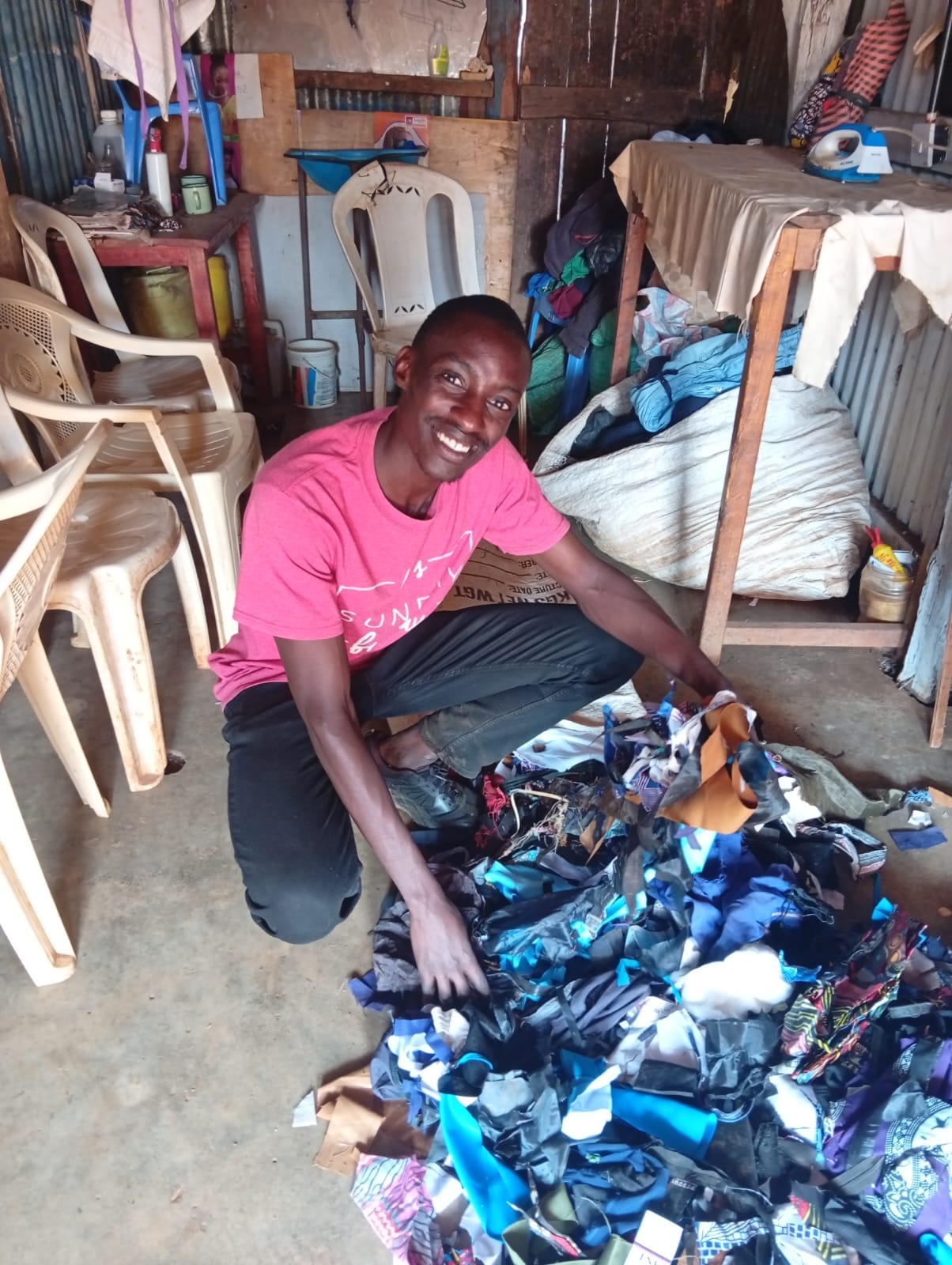
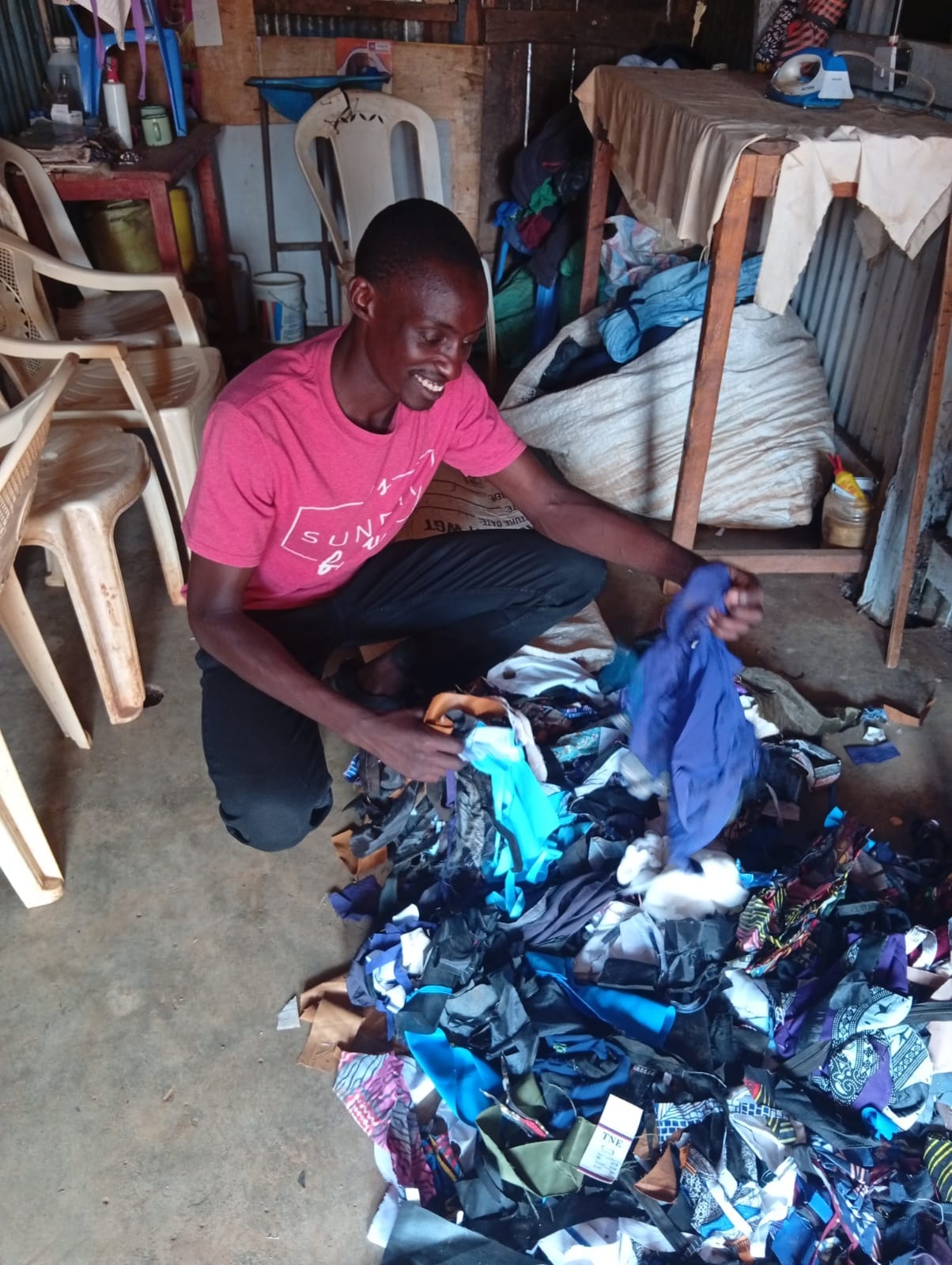
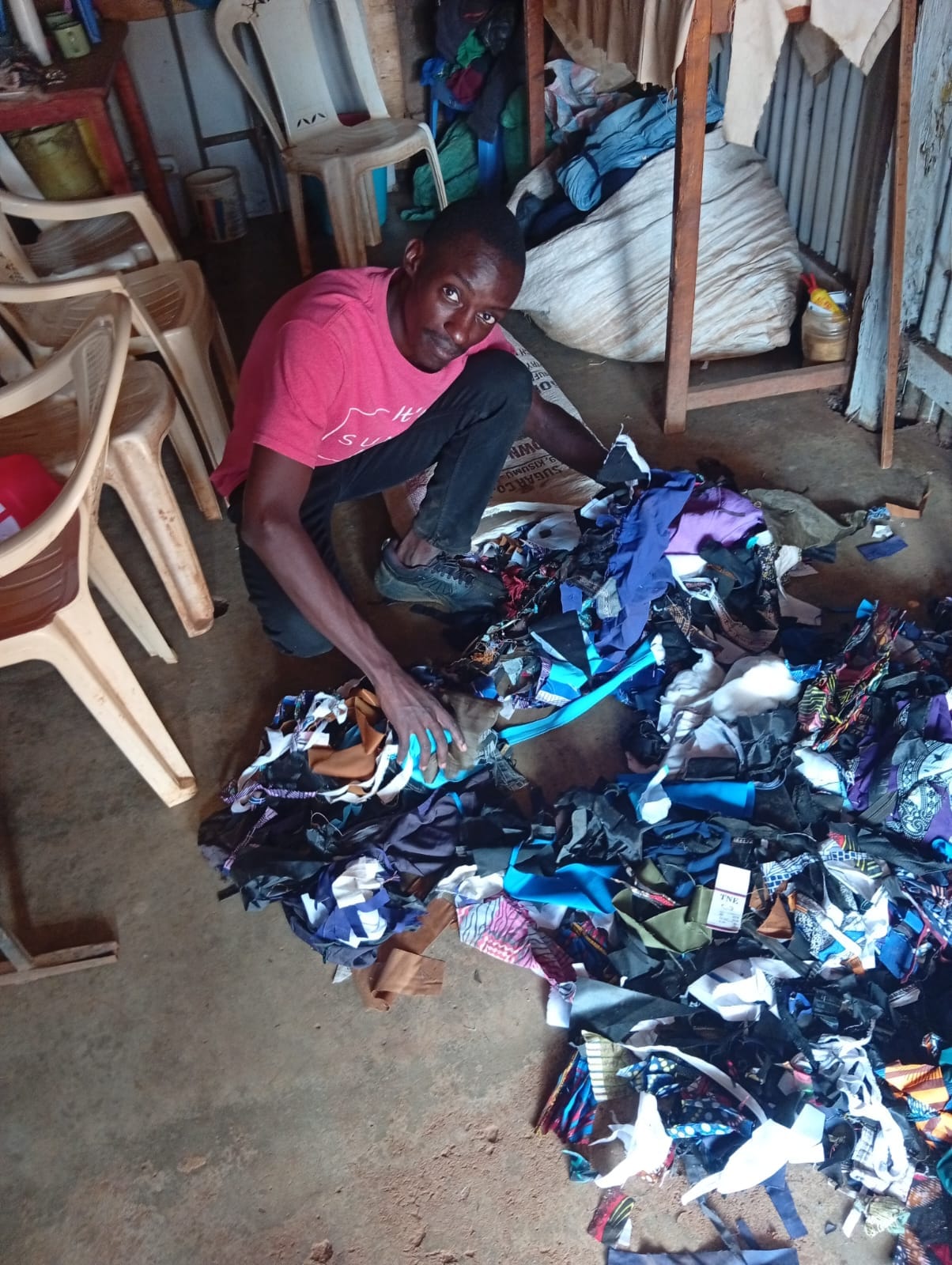
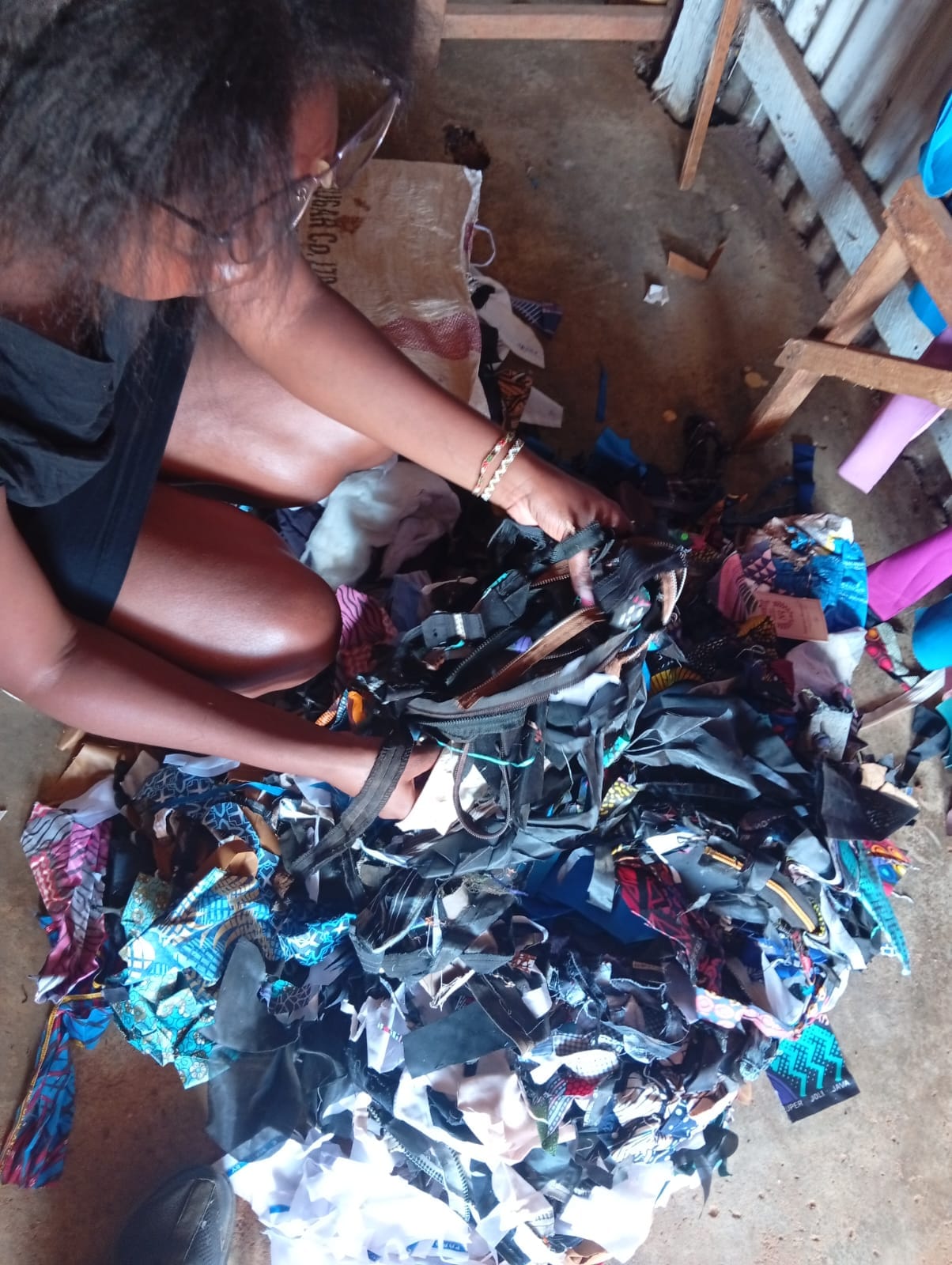
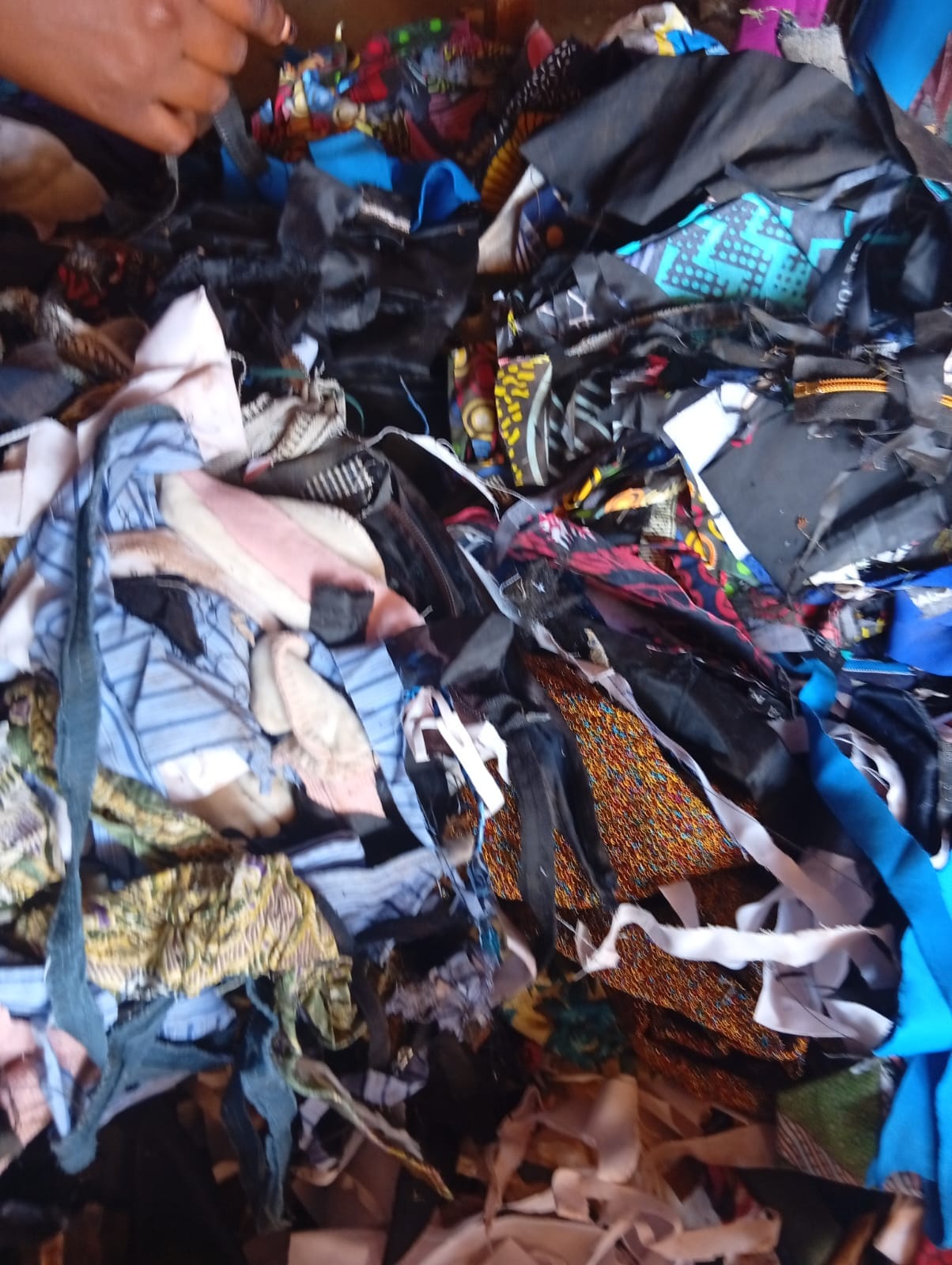
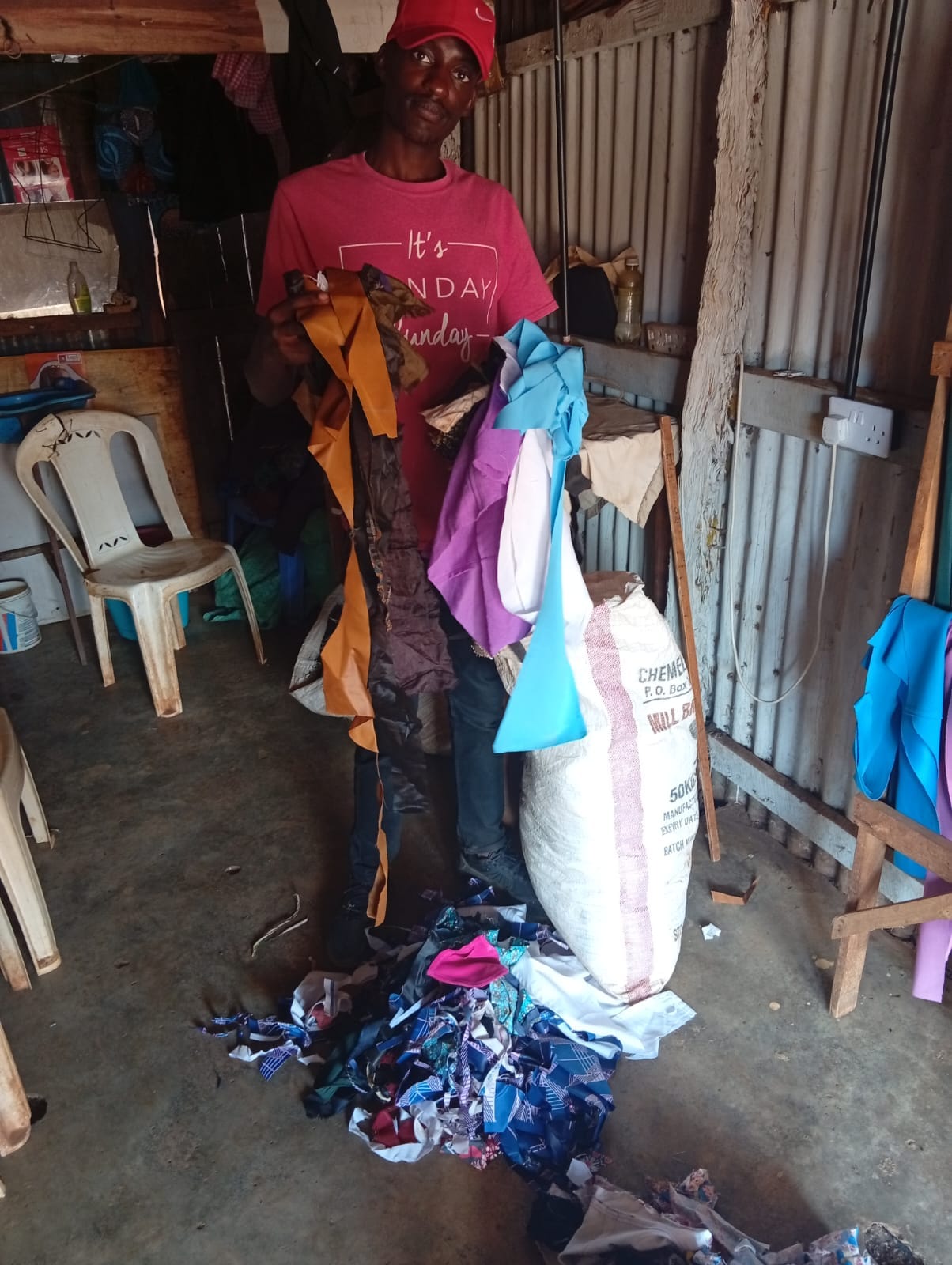
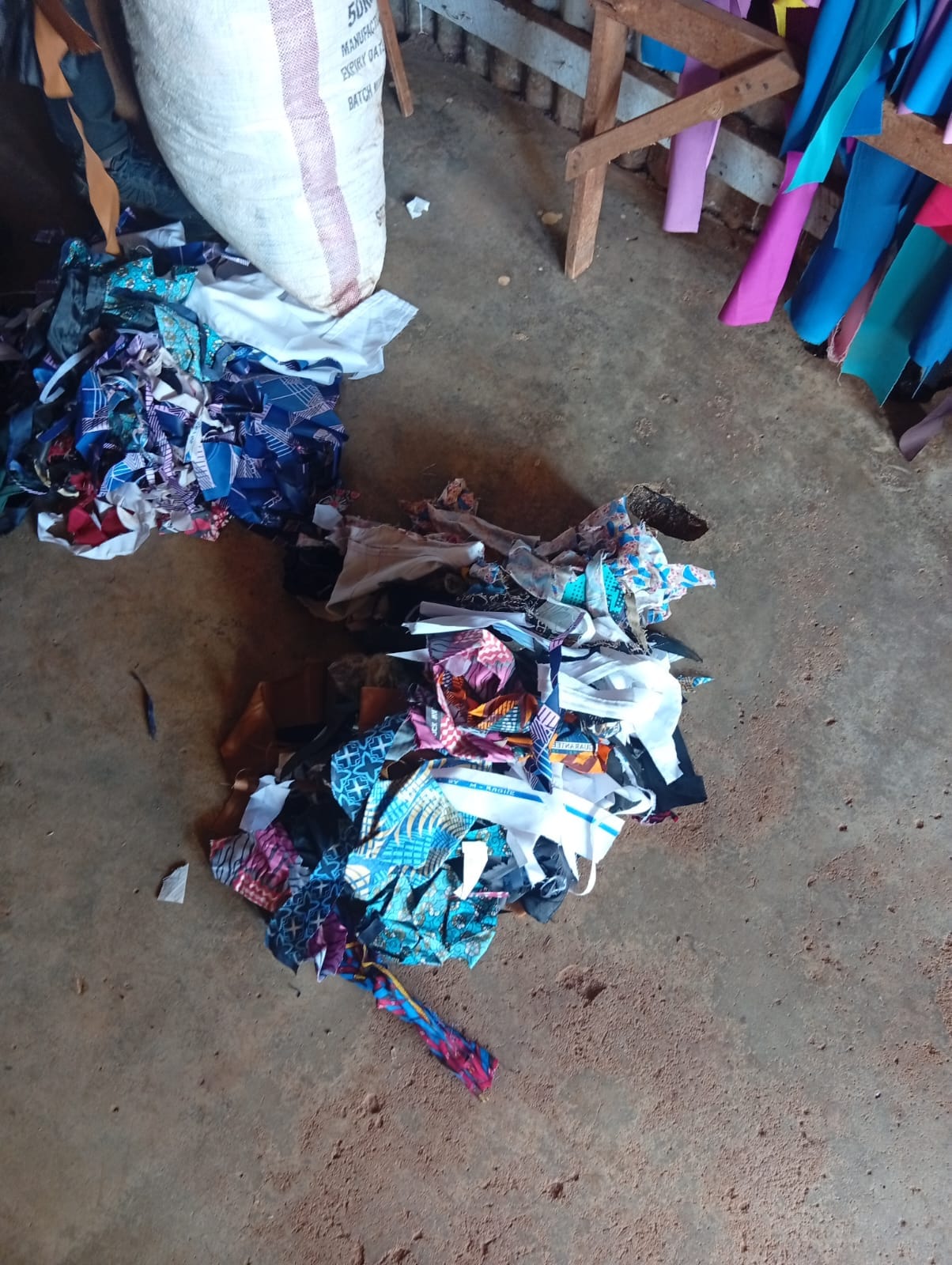
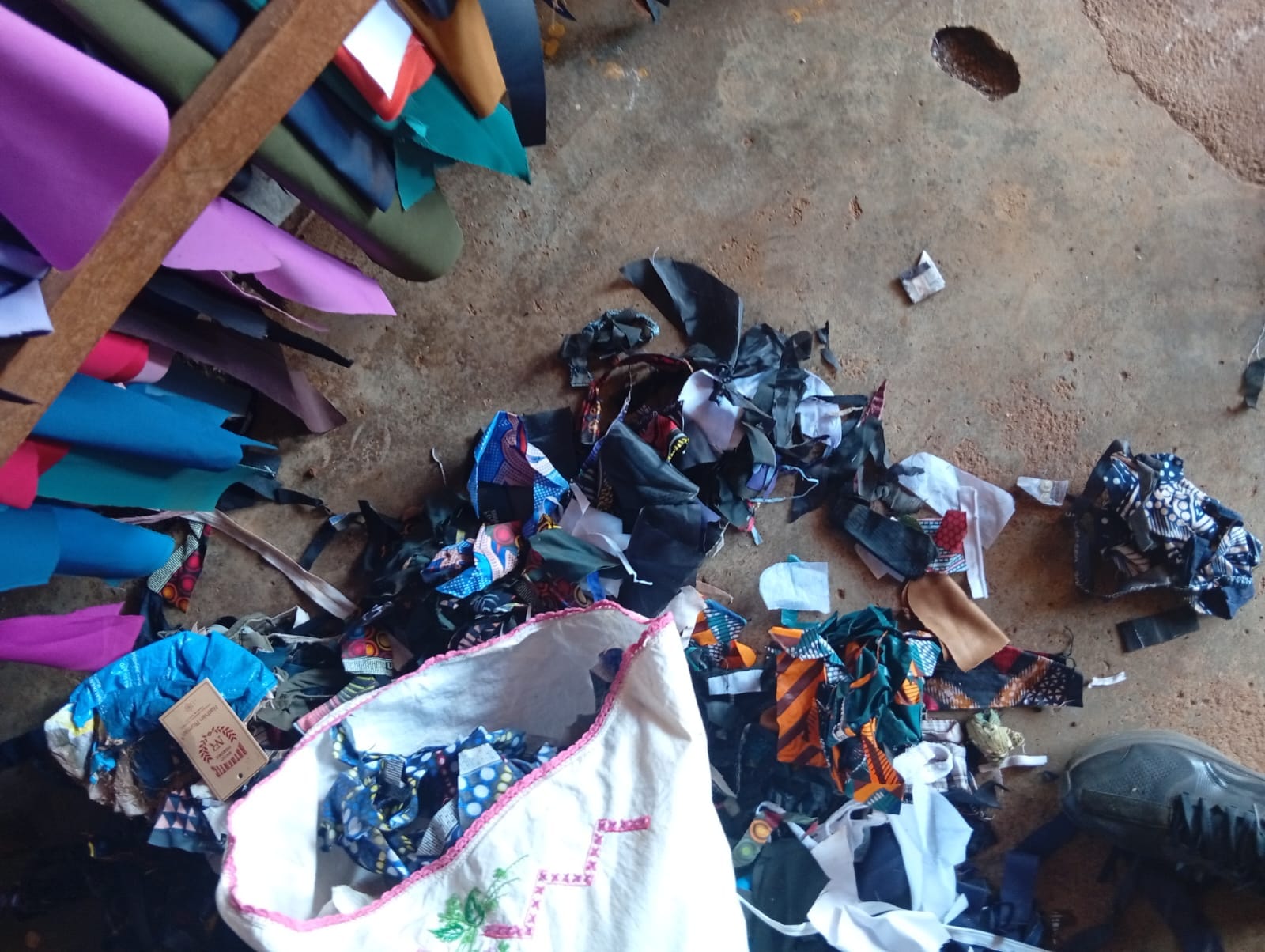
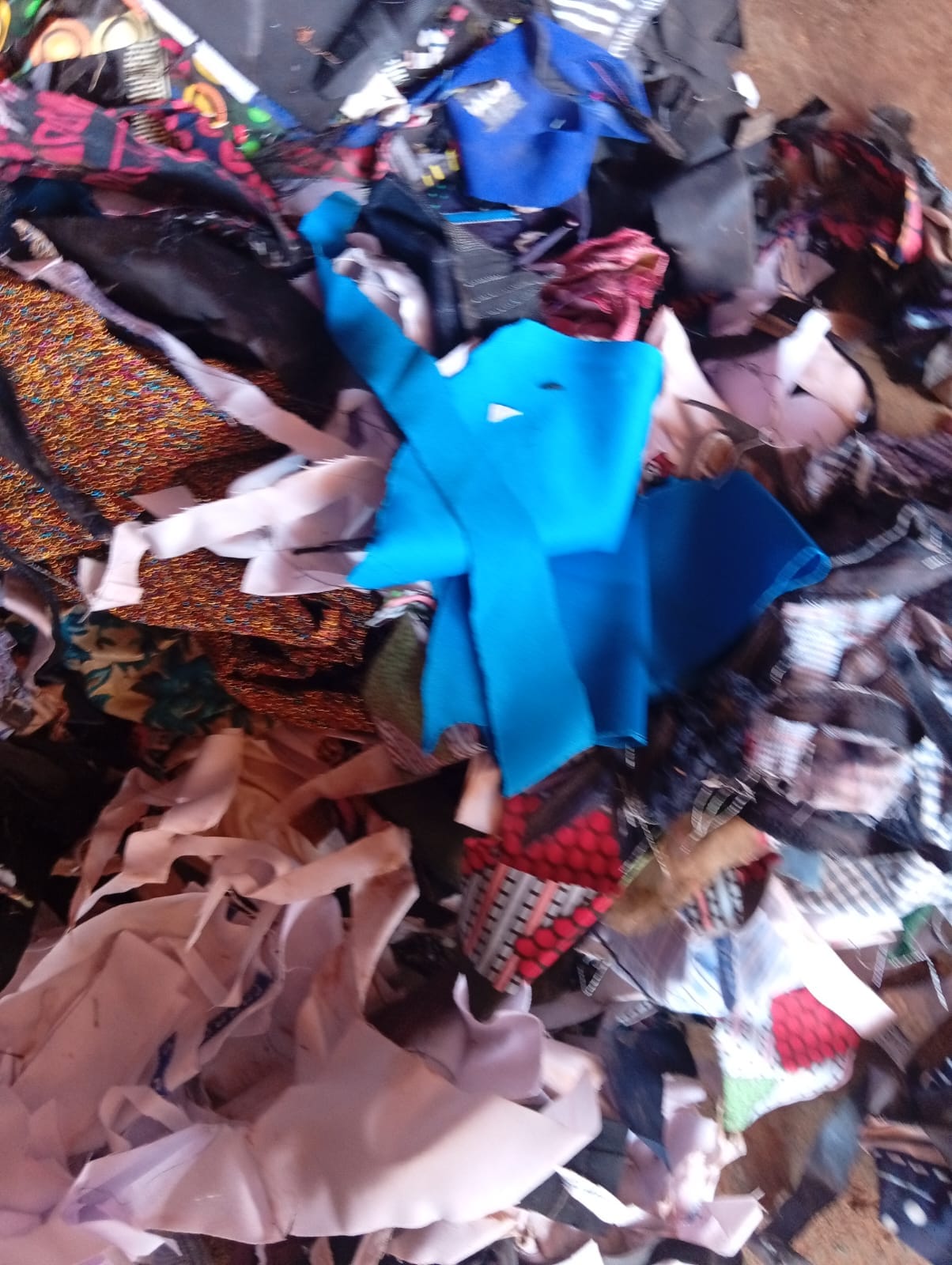
Every tailoring bench makes a second product that nobody orders: offcuts. The strip trimmed from a hem, the curve cut away from a collar, the end of a kitenge length too short to sell. In the workshop we visited in Mabs, they had piled up on the floor beside the cutting table.
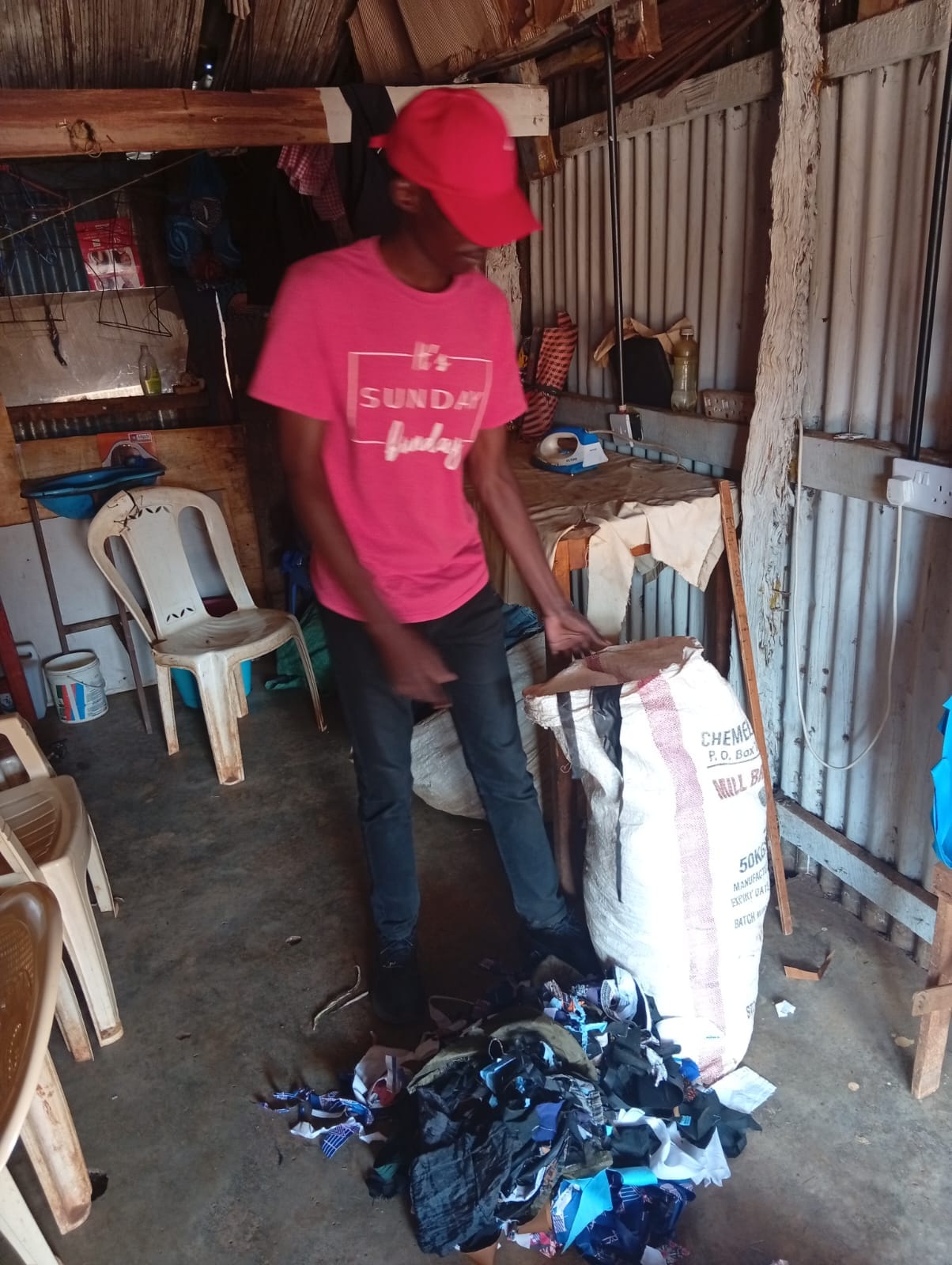
They were sorted on the spot. Plain cotton and polyester went one way, printed kitenge another, and the zips and labels came out by hand — a zip left in a bale is what spoils a batch for whoever processes it next. What was left filled a reused sugar sack, with more still on the floor.
This is where the pilot starts: at the benches where textile waste is made, before it reaches a drain, a fire or a dump. One workshop is a pile of rags. Fifteen of them is a supply chain.